Key & Door System
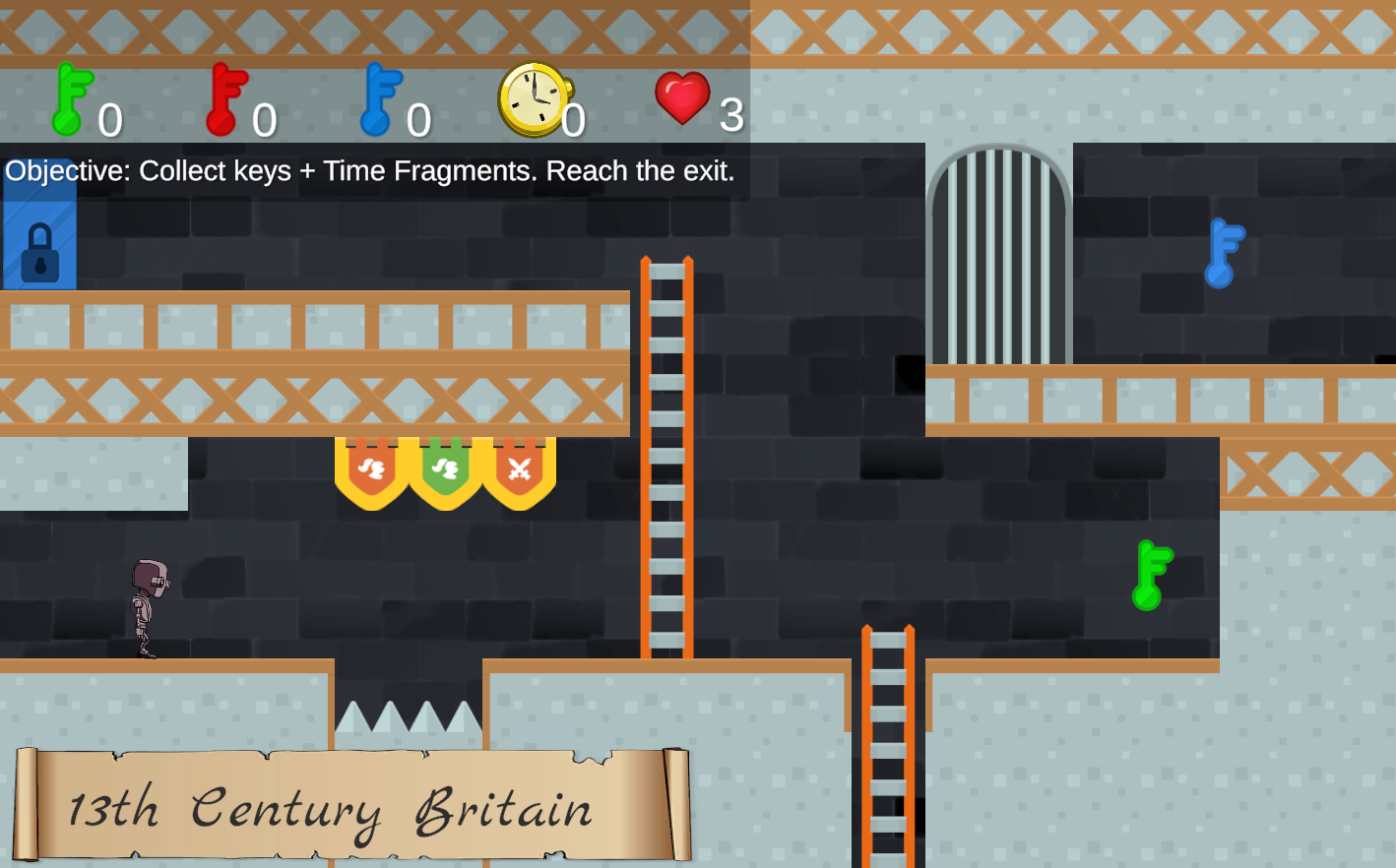
Implemented a colour-based key and door system that drives progression, encouraging exploration and route planning within the level.
Featured Project
A solo-developed 2D platformer vertical slice built in Unity, focused on a clear gameplay loop of exploration, progression, and environmental challenge.
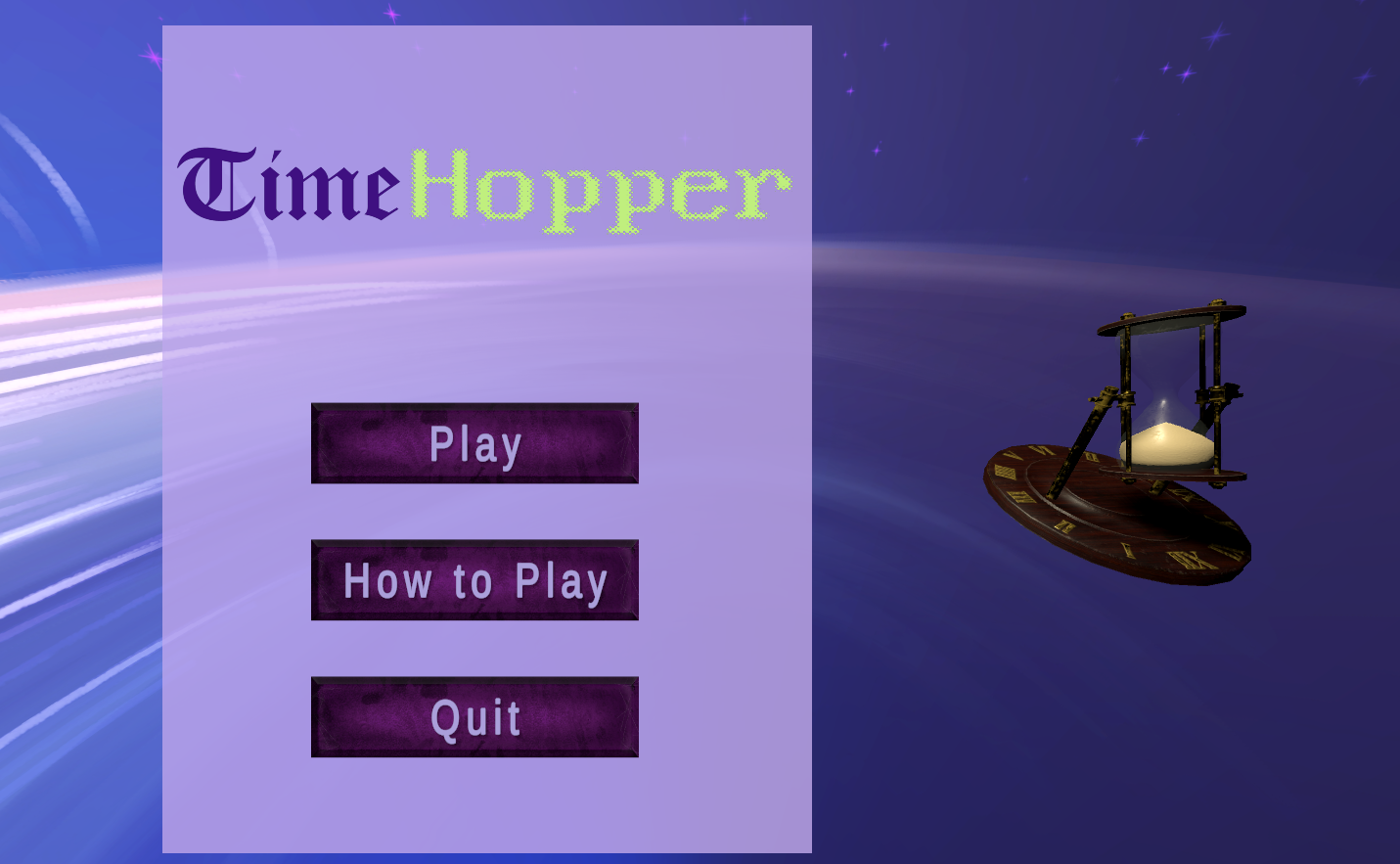
TimeHopper is built around a core idea of travelling through time to stop Dr. Haggis McTimey. The current build focuses on a medieval-era level where players collect keys, unlock paths, and gather Time Fragments, with the wider concept designed to expand across multiple time periods and environmental boss encounters.
TimeHopper is a solo-developed 2D platformer built in Unity, centred around navigating “passages of time” to stop a time-manipulating antagonist, Dr. Haggis McTimey.
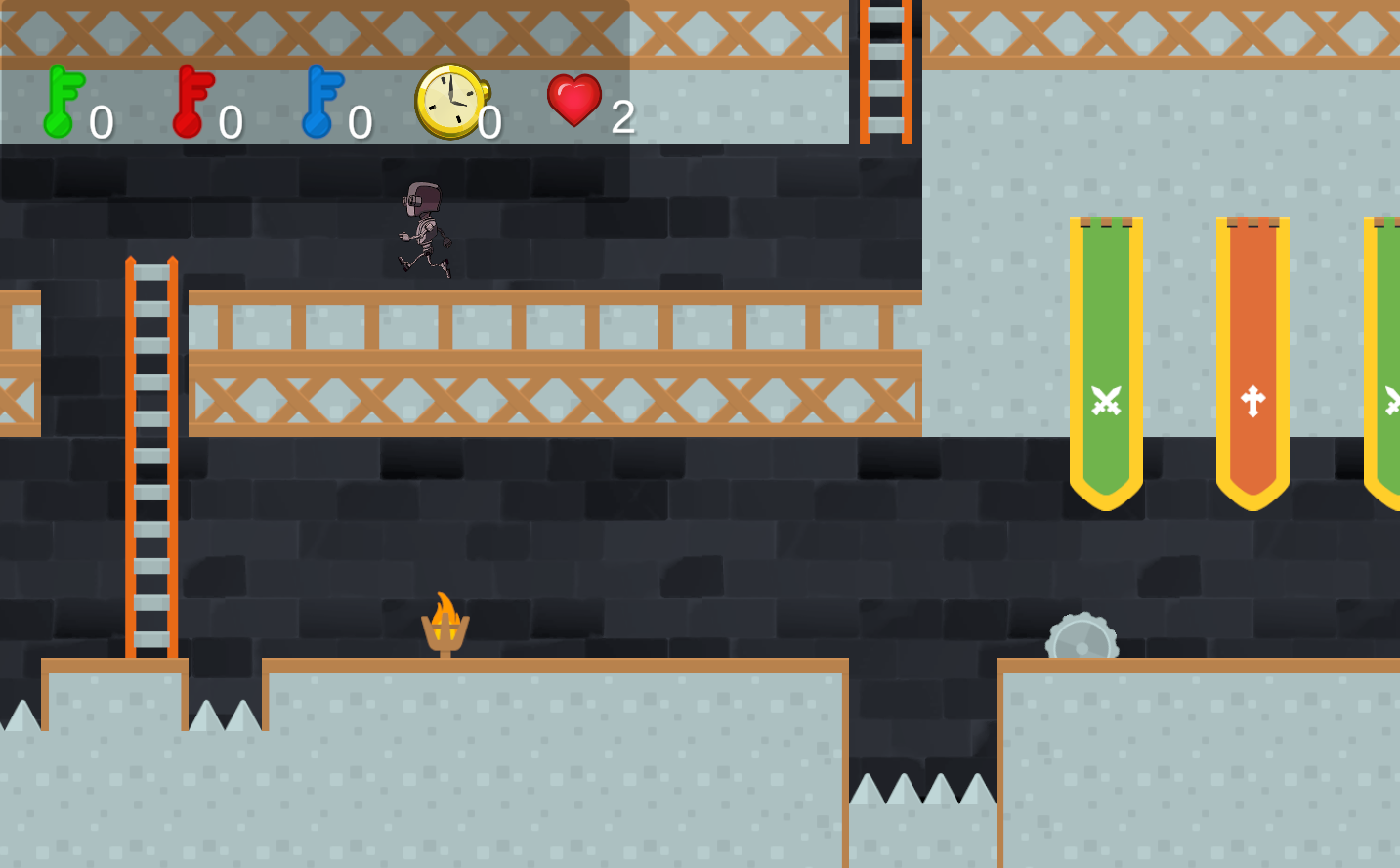
The current implementation is a polished vertical slice set in a medieval time period. The core gameplay loop revolves around collecting coloured keys, unlocking matching doors, navigating hazards, and gathering Time Fragments to progress through and escape the level.
The wider design is intended to scale across multiple time periods, reusing and expanding this core loop while introducing new environments and mechanics. Progression is designed around collecting Time Fragments, which would unlock larger set-piece levels focused on environmental challenges rather than direct combat.
TimeHopper was developed as a solo project, meaning I was responsible for the full design and implementation of the game. This included gameplay systems, level design, UI, audio integration, and overall presentation.
I designed and built the core gameplay loop from the ground up, ensuring that each element - keys, doors, hazards, and collectibles - worked together as a cohesive and understandable experience for the player.
Alongside system development, I focused on structuring the project in a way that could scale beyond a single level, allowing the same mechanics to support future time-period environments and more complex scenarios.
Implemented a colour-based key and door system that drives progression, encouraging exploration and route planning within the level.
Designed collectible fragments as both a progression mechanic and a foundation for future expansion, where totals would gate access to larger encounters.
Built environmental challenges and traversal systems that require timing, positioning, and careful movement rather than combat.
Designed the level as a clear vertical slice, ensuring the core loop was understandable, playable, and representative of the wider game concept.
One of the strongest aspects of TimeHopper is its clarity. The core gameplay loop is easy to understand - collect keys, unlock paths, navigate hazards, and gather Time Fragments - allowing players to quickly grasp what the game expects from them.
The project also benefits from a controlled scope. By focusing on a single, well-structured level, I was able to ensure that the mechanics felt intentional and complete rather than spread too thin across unfinished ideas.
From a design perspective, the decision to avoid direct combat helped create a more focused experience. Challenges are driven by movement, timing, and environmental interaction, which aligns well with the planned direction of boss encounters based on outsmarting the enemy rather than fighting them directly.
Overall, the project succeeds in presenting a clear and playable slice of a larger concept, demonstrating how strong fundamentals and careful scope control can result in a more effective and presentable game.
TimeHopper reinforced the importance of building around a strong core idea and making sure the final result communicates that idea clearly through play.
It also highlighted how valuable scope control can be. A smaller project can still be a strong portfolio piece when its best features are presented clearly and refined properly.